Introduction: The Role of Stainless Steel Rings
In today’s advanced manufacturing landscape, stainless steel rings play a critical role in ensuring the performance and reliability of mechanical systems.
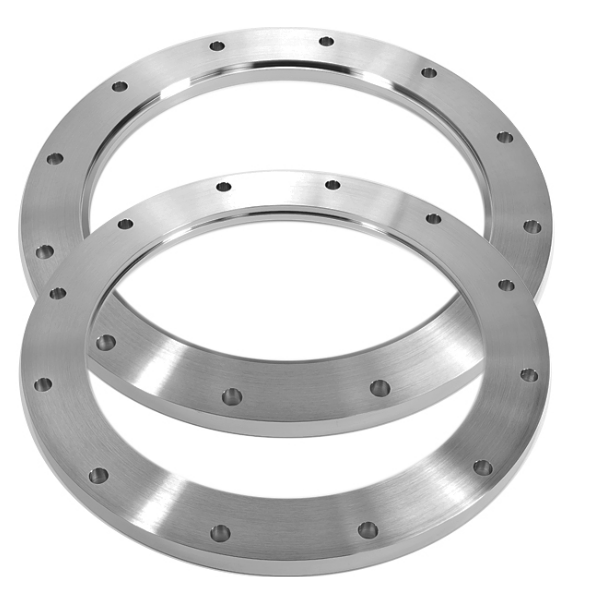
These precision-engineered components — whether used as flange rings, sealing rings, or structural spacers — are vital in industries such as machinery, automotive, aerospace, and energy.
Made from corrosion-resistant stainless steels and produced through CNC machining, these rings offer unmatched dimensional accuracy and surface quality, allowing them to perform consistently under high loads, pressure, and temperature variations.
Why CNC Machining Is Ideal for Stainless Steel Rings
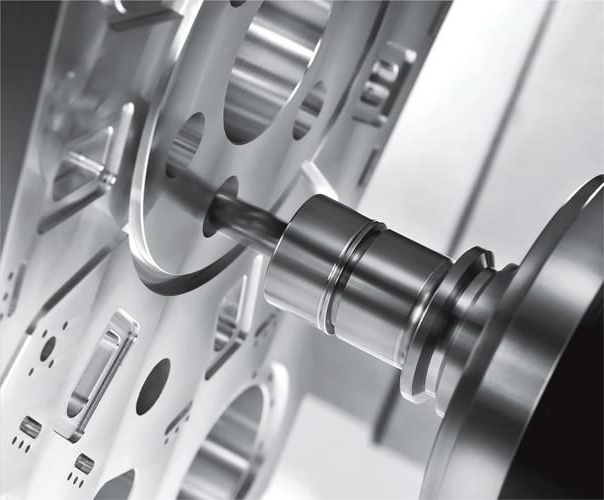
CNC machining has become the preferred method for producing stainless steel rings and other circular components.
This is because CNC (Computer Numerical Control) technology offers superior control over cutting paths, tolerances, and surface finishes.
For applications where precision is critical — such as sealing interfaces, rotating assemblies, and flange couplings — accuracy within microns can make all the difference.
Key advantages of CNC machining stainless steel rings include:
- High dimensional precision(tolerance up to ±0.005 mm)
- Perfect concentricity for rotational parts
- Smooth surface finish suitable for sealing or press-fit connections
- Flexible customization— from small prototypes to mass production
Whether the rings are used in hydraulic systems, pump housings, or mechanical joints, CNC machining ensures that every part meets exact engineering requirements.
Common Applications of Stainless Steel Rings
Depending on their size, thickness, and machining design, stainless steel rings can serve various purposes across industries. Some of the most common include:
1. Flange Rings
Used to connect pipes, valves, or machinery components.
Precision-machined flange rings ensure tight and leak-free connections while maintaining alignment between mechanical assemblies.
2. Sealing Rings
In pumps, compressors, and engines, stainless steel sealing rings are critical for containing fluids or gases under high pressure.
They are often paired with elastomer seals or coated with PTFE, nickel, or ceramic layers for enhanced performance.
3. Spacer and Retaining Rings
These components maintain proper spacing or positioning between rotating parts.
Their flatness and uniform thickness prevent vibration and improve mechanical balance.
4. Structural or Support Rings
Used in heavy machinery, turbines, and robotics, structural rings provide rigidity and distribute mechanical loads evenly across a system.
Materials and Grades for Stainless Steel Rings
Selecting the right stainless steel grade is crucial for achieving optimal mechanical and corrosion-resistant properties.
Common materials used for CNC-machined stainless steel rings include:
| Material | Common Grade | Key Features |
|---|---|---|
Austenitic SS |
304 / 316 / 316L |
Excellent corrosion resistance, general use |
Martensitic SS |
410 / 420 / 440C |
High hardness, wear resistance |
Duplex SS |
2205 |
High strength, stress corrosion cracking resistance |
Precipitation-Hardening SS |
17-4PH |
Excellent strength and moderate corrosion resistance |
For sealing or flange rings used in corrosive or marine environments, 316L stainless steel is the most popular choice due to its superior pitting resistance.
Surface Treatments to Enhance Performance
After CNC machining, surface finishing plays a major role in improving the appearance, durability, and functionality of stainless steel rings.
Common finishing options include:
- Mirror Polishing: Achieves a high-reflective, smooth surface to reduce friction.
- Pickling & Passivation: Removes impurities and restores the protective chromium oxide layer for better corrosion resistance.
- Black Oxide Coating: Enhances aesthetics and provides mild corrosion protection for non-contact surfaces.
- Anodizing (for Aluminum Inserts): Used in hybrid assemblies to increase surface hardness.
For sealing applications, ultra-smooth surfaces with Ra ≤ 0.2 μm are often required to ensure perfect sealing performance and minimal wear.
CNC Machining Capabilities for Ring Components
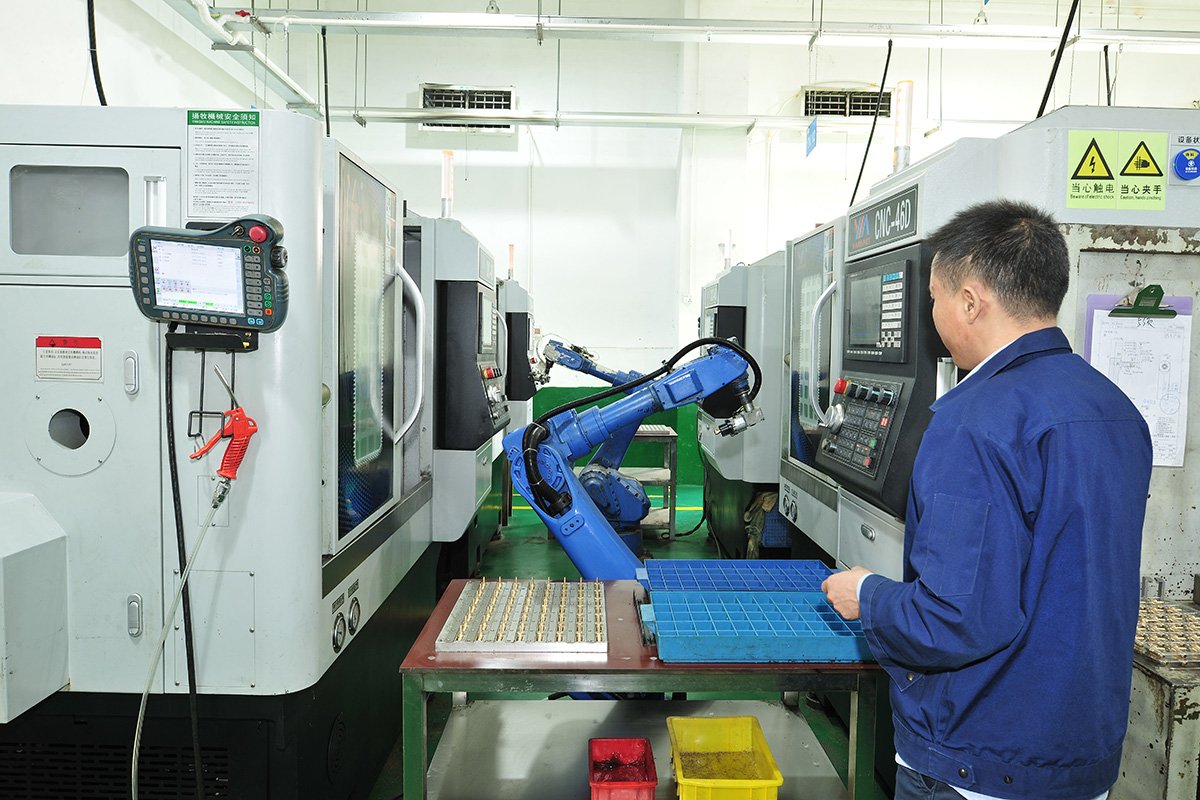
Producing stainless steel rings requires precision machining capabilities that can handle both turning and milling operations efficiently.
Typical CNC processes include:
- CNC Turning: Ideal for producing the circular profile and internal/external diameters.
- CNC Milling: Used for bolt holes, slots, or custom flange patterns.
- Boring and Drilling: For center holes or precision mounting interfaces.
- Grinding and Lapping: For achieving perfect flatness and tight sealing tolerances.
Modern 5-axis CNC machines can complete multiple operations in a single setup, reducing cycle times and maintaining consistency between batches.
Quality Control and Inspection
Precision parts like stainless steel rings demand strict quality control.
Manufacturers use advanced inspection tools such as CMM (Coordinate Measuring Machines), roundness testers, and surface roughness gauges to verify tolerances and geometry.
Dimensional reports, material certificates, and surface finish data are typically provided to guarantee traceability and reliability.
Custom CNC-Machined Stainless Steel Rings
At [Your Company Name], we specialize in custom CNC machining of stainless steel rings for a wide range of applications — from flange and sealing rings to structural and rotating assemblies.
Our engineering team supports:
- Custom dimensions (inner/outer diameter, thickness, bolt pattern)
- Prototyping and low-volume manufacturing
- Tight tolerance control and mirror polishing
- ISO 9001 certified quality system
Whether you need a 316L sealing ring for a marine pump or a 17-4PH flange ring for aerospace use, we provide the right combination of material, precision, and finishing.
Conclusion
Stainless steel rings are essential components in today’s high-performance mechanical systems.
Through CNC precision machining, these parts achieve superior accuracy, reliability, and corrosion resistance — ensuring long-term durability in critical applications.
From flange rings to sealing and structural components, CNC machining provides the flexibility and consistency that industrial customers demand.
If you’re looking for a reliable supplier of custom stainless steel CNC rings, [Your Company Name] is ready to support your project with advanced manufacturing technology and engineering expertise.
Complete Guide to Understanding Pipe Flanges
Advanced CNC Machining for Automotive and Industry