Introduction: Advancing the Frontiers of CNC Manufacturing
In today’s high-performance industries — from aerospace to automotive and heavy machinery — precision machining is no longer just about cutting metal. It’s about combining advanced CNC technologies with forging, casting, and surface enhancement processes to produce components that are stronger, lighter, and longer-lasting.
At the heart of this evolution are methods like 5-axis CNC machining for complex forged geometries, multi-tasking CNC turning-milling for castings, and CNC micro-blasting for forged surface peening. When paired with surface treatments such as Type III hardcoat anodizing, electroless nickel plating (MIL-C-26074), and passivation (ASTM A967), manufacturers achieve unmatched performance and corrosion resistance across a range of materials — from aluminum to forged steel and stainless alloys.
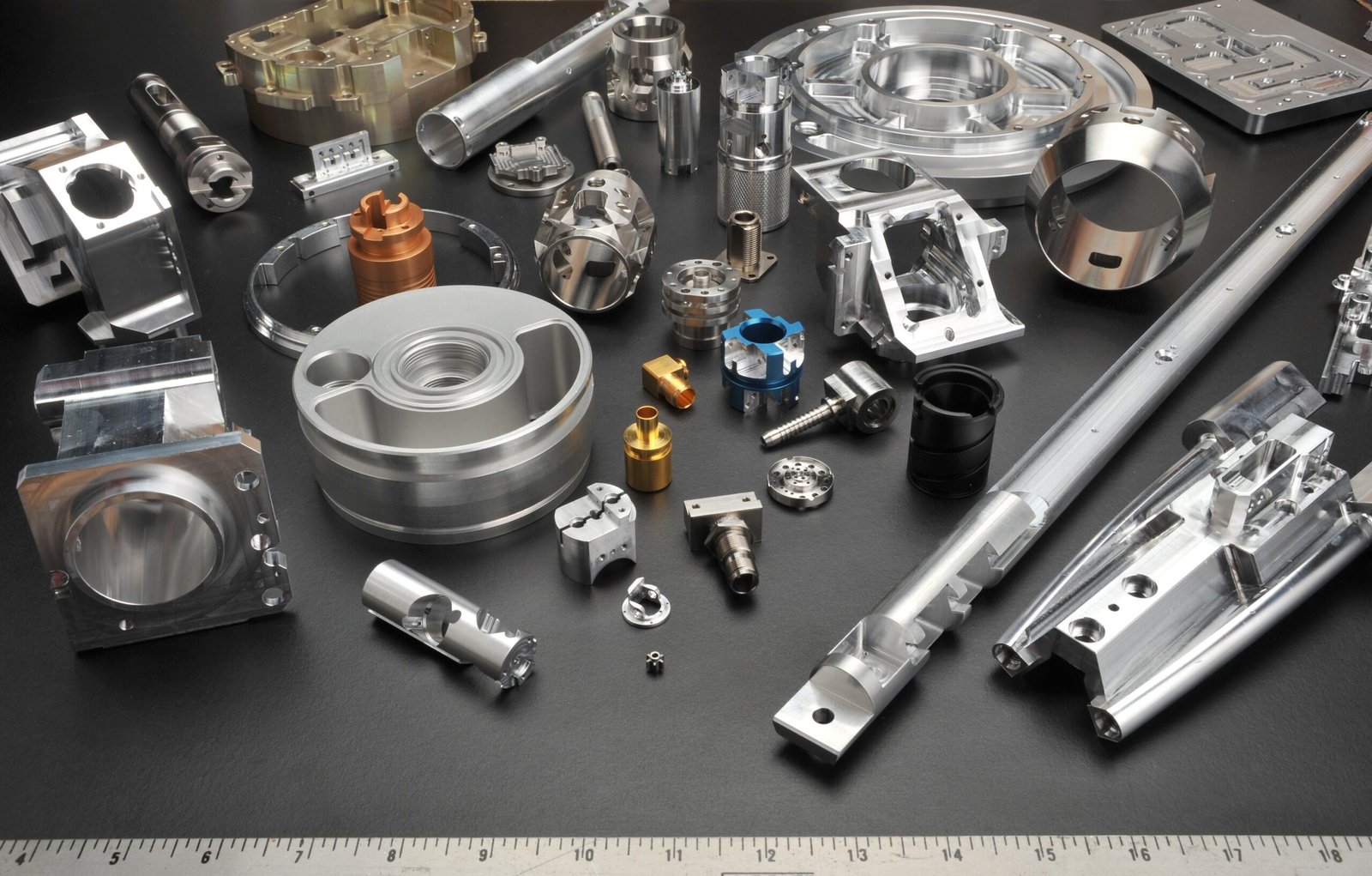
5-Axis CNC Machining for Complex Forged Geometries
Forged components are renowned for their superior mechanical properties — high strength, grain alignment, and impact resistance. However, they also come with irregular, near-net shapes that challenge traditional 3-axis machining.
That’s where 5-axis CNC machining excels.
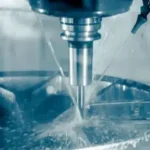
Simultaneously controlling five axes of motion, it enables precise contouring of complex forged geometries while maintaining tight tolerances and superior surface finishes.
Key advantages of 5-axis CNC for forgings:
- Machine multiple faces of a part in one setup — improving accuracy and reducing cycle time.
- Maintain perfect geometric alignment even on curved or tapered surfaces.
- Ideal for turbine components, forged brackets, aerospace housings, and connecting rods.
This combination of forging strength and CNC precision allows engineers to push design boundaries without compromising reliability.
Multi-Tasking CNC Turning-Milling for Cast Components
Cast parts — particularly aluminum or steel castings — offer design flexibility and cost-effectiveness for complex shapes. Yet, machining them requires both turning and milling operations to achieve final precision.
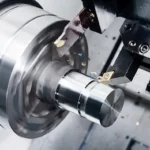
Modern multi-tasking CNC turning-milling centers integrate both processes into a single setup, enabling:
- Improved efficiency by eliminating re-clamping and setup errors.
- Better dimensional accuracy on multi-featured cast parts.
- Smooth surface finishes suitable for sealing and assembly interfaces.
Applications range from pump housings, impellers, and gearbox casings to precision automotive and robotics components.
By combining turning, drilling, milling, and threading in one cycle, multi-tasking CNC machines enhance productivity and ensure consistent quality for both ferrous and non-ferrous cast materials.
CNC + Micro-Blasting for Forged Surface Peening
Surface integrity is critical for high-stress forged parts such as shafts, gears, or turbine disks. One proven way to enhance fatigue resistance and surface texture is CNC-controlled micro-blasting, also known as precision surface peening.
This process uses abrasive micro-media, directed at controlled pressures, to:
- Induce compressive stresses on the surface to improve fatigue strength.
- Remove minor machining marks or scale from forging.
- Enhance coating adhesion for subsequent plating or anodizing.
When integrated into CNC workflows, micro-blasting provides a repeatable and automated method for preparing forged parts for downstream finishing, thereby improving both mechanical and visual quality.
Cast Aluminum CNC + Type III Hardcoat Anodizing
Aluminum castings are valued for being lightweight and corrosion-resistant, but their surface hardness often needs improvement for demanding environments.
Type III hardcoat anodizing, also known as hard anodizing, is the ideal solution.
After CNC machining, aluminum parts are immersed in an electrolytic bath, forming a dense oxide layer that provides exceptional wear and corrosion protection.
Benefits of Type III hardcoat anodizing for CNC aluminum components:
- Increases surface hardness up to 60–70 HRC
- Improves wear resistance and thermal stability.
- Provides electrical insulation and optional color coding.
This process is essential for hydraulic components, aerospace housings, and high-precision enclosures where both strength and dimensional stability matter.
Forged Steel CNC + Electroless Nickel Plating (MIL-C-26074)
Forged steel components require surface protection that matches their inherent toughness.
Electroless nickel plating (ENP) — performed in compliance with MIL-C-26074 — delivers an even, hard, and corrosion-resistant layer that enhances both function and appearance.
Unlike electroplating, ENP does not rely on electrical current, ensuring uniform coating thickness even on complex geometries or blind holes.
This makes it ideal for forged parts with intricate shapes.
Key benefits of ENP (MIL-C-26074) for CNC-machined forged steel parts:
- Uniform thickness on all surfaces.
- High hardness (up to 1000 HV)for wear protection.
- Excellent corrosion resistance in harsh environments.
- Improved lubricity for moving components.
Typical applications include gear rings, hydraulic fittings, drive shafts, and precision couplings used in oil & gas, defense, and industrial equipment.
Investment Cast CNC + Passivation per ASTM A967
Investment casting allows the production of extremely intricate metal parts with minimal machining allowance. However, when those castings are made from stainless steel or nickel alloys, passivation becomes critical to preserve corrosion resistance after machining.
ASTM A967 defines the industry-standard process for chemically passivating stainless steels.
After CNC machining, parts are immersed in acid-based solutions that remove free iron and restore the protective chromium oxide film.
Advantages of ASTM A967 passivation for CNC castings:
- Restores natural corrosion resistance lost during machining.
- Prevents rust or oxidation during storage or use.
- Ensures compliance with aerospace, medical, and defense standards.
This treatment is essential for precision investment-cast valves, fittings, instrumentation housings, and other stainless assemblies that demand long-term durability.
The Integration of CNC Machining and Surface Engineering
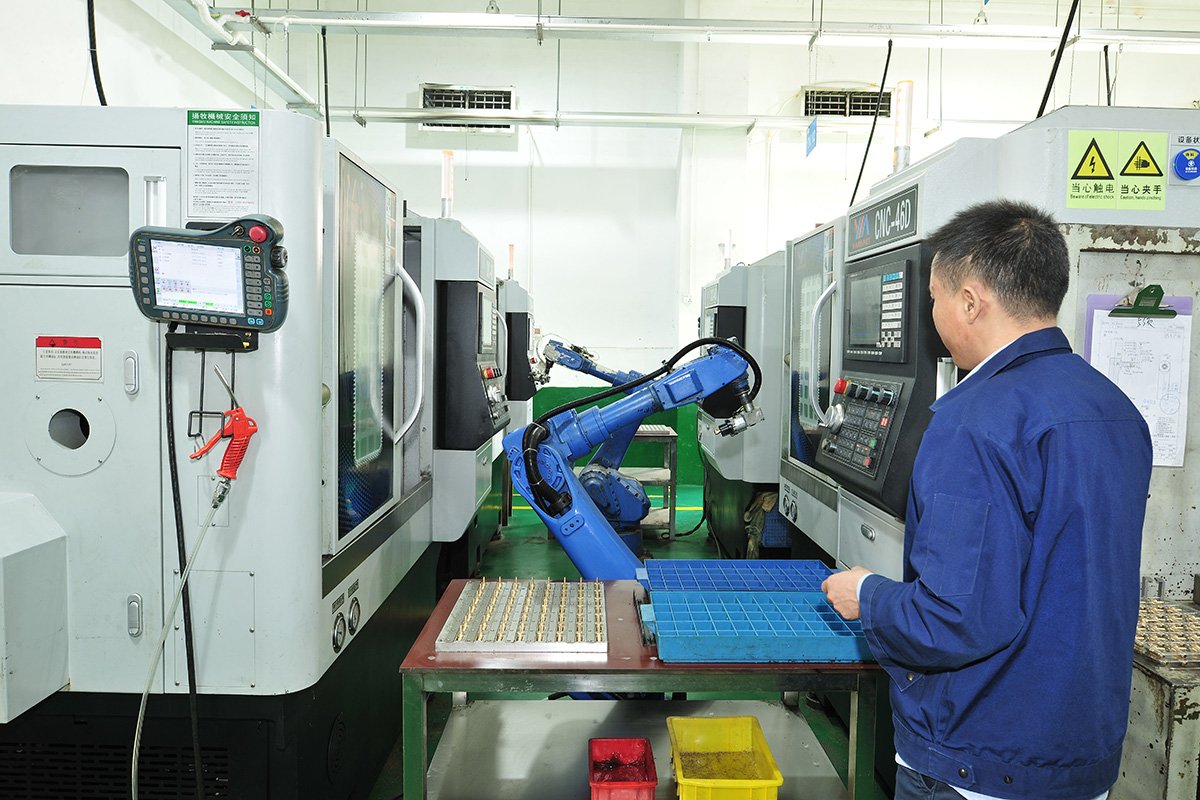
The most advanced manufacturing facilities today integrate CNC machining with surface engineering technologies in a single production workflow.
This approach minimizes handling, improves throughput, and ensures the perfect match between machined geometry and surface functionality.
For example:
- Forged steel shafts may be 5-axis machined, micro-blasted, and nickel-plated.
- Aluminum cast housings may undergo CNC milling, followed by Type III hard coat anodizing.
- Stainless steel cast valves may be CNC turned and passivated to ASTM A967 standards.
This integration ensures that every component — regardless of its origin (forged, cast, or investment cast) — leaves the factory fully machined, treated, and ready for service.
Quality Control and Certification
To maintain the reliability and traceability of these advanced processes, quality control plays a vital role.
Reputable CNC suppliers adhere to standards such as ISO 9001, AS9100, and IATF 16949, and follow strict process documentation for all finishing operations.
Typical verification includes:
- Coating thickness and hardness testing.
- Surface roughness and dimensional inspection.
- Corrosion resistance verification (salt spray, immersion).
- Material certification and traceability records.
Such rigorous quality management ensures compliance with international standards like MIL-C-26074 and ASTM A967, providing customers with complete confidence in their CNC-machined components.
Conclusion
The combination of advanced CNC machining and surface engineering has transformed how forged and cast components are made.
Technologies like 5-axis machining, multi-tasking turning-milling, micro-blasting, and coatings such as hard anodizing, electroless nickel plating, and passivation enable parts to meet increasingly demanding performance requirements.
By integrating these processes, manufacturers achieve:
- Higher mechanical strength and dimensional stability.
- Superior corrosion and wear resistance.
- Shorter production cycles and consistent quality.
For customers seeking reliable partners in CNC machining for forged and cast components, GMPRE provides full-service manufacturing — from design support and precision machining to certified finishing and inspection.
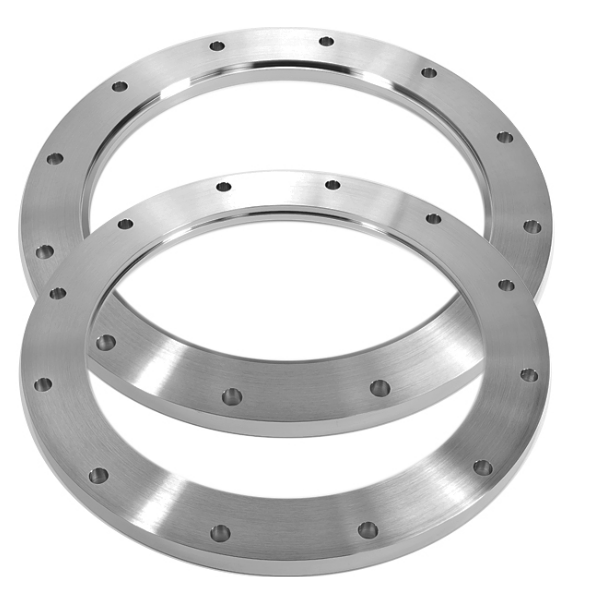
Complete Guide to Understanding Pipe Flanges
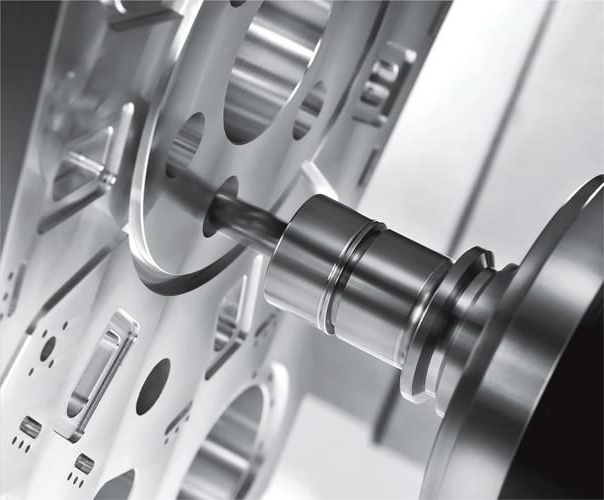
Advanced CNC Machining for Automotive and Industry